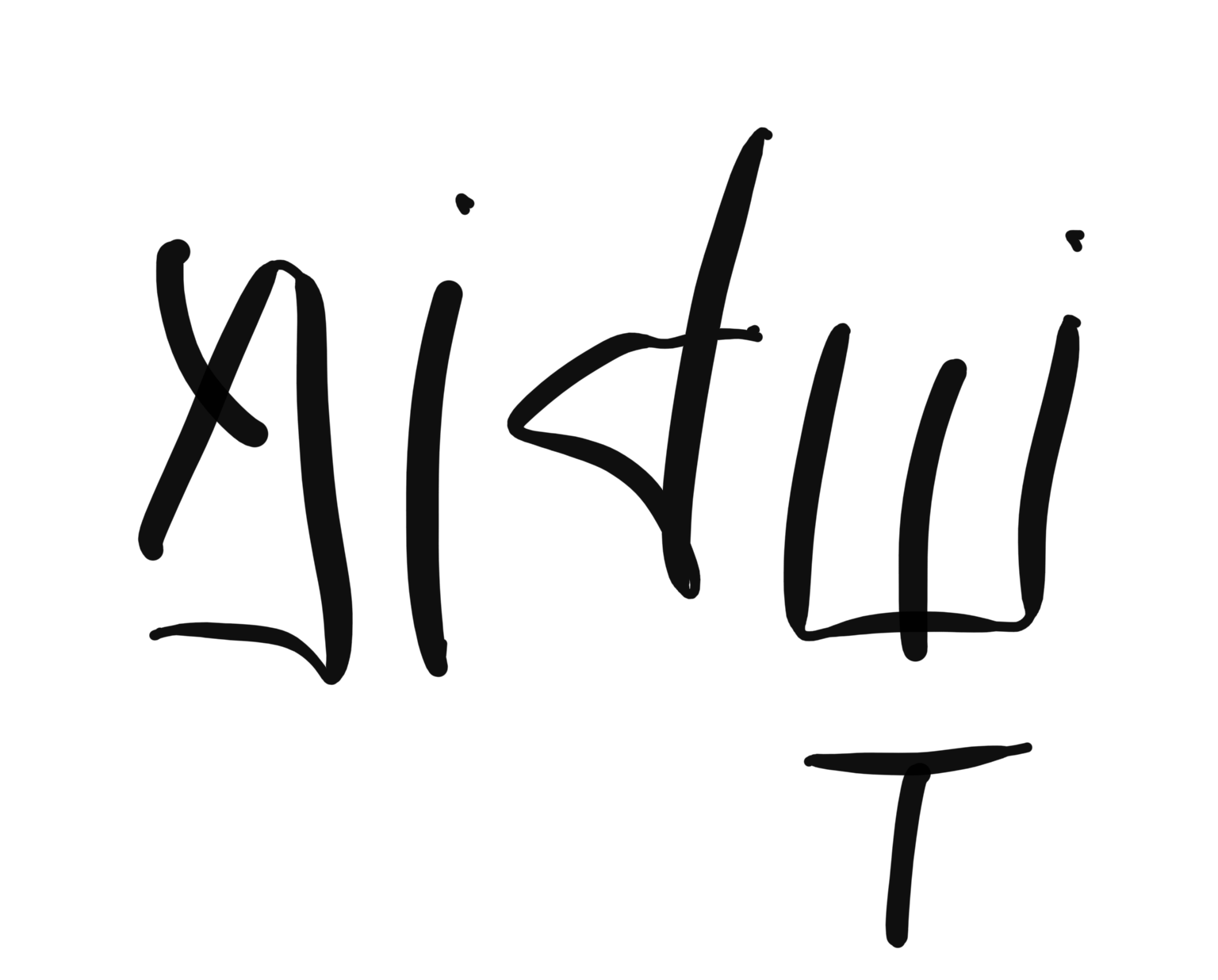
יְהוָה
Right to left, Yud, hay, vav, hay / ‘e’ as in ‘yes’ and ‘a’ as in the common exclamation ‘aha!’.
Yehvah
When you put those two dots, the sh’va, underneath a yud at the beginning of a word, followed by a hay, this is a correct way to say it. That’s the Name of God as it appears in the Hebrew Torah, kind of like the biblical names Abraham, Isaac, Jacob, Sarah, Rebecca, Leah or Rachel, or like my name, Craig, kind of the same, but kind of different. The names Abraham, Isaac, and Jacob of course are actually westernized versions of the actual Hebrew (Avraham, Yitzchak and Ya’acov), so I suppose that there could be a westernized version of God’s Name as well, but, if I’m just going to look straight at it, and call it like I see it, ball or strike, then that’s what we’ve got here today, which is the way I like it.
Most of us are familiar with the name(s) Jehovah or Yahweh, which are based upon these four Hebrew consonants and two vowels, but neither really look at it straight on and just say it as I do here. There’s no ‘J’ and no long ‘o’ and the ‘e’s and ‘ah’s seem to be reversed. They both dance around what’s actually there in the Hebrew. Remember, in some ways we are all similar to God, but in other ways, quite different, it’s almost certainly like this when it comes to a name, or, in this case, the Name as well. Regardless, you’ll never see this in an English bible translation, what we always see is ‘the Lord.’ 99+% of the time, when you’re reading your Bible, and you see ‘the Lord,’ what’s actually been written on the other side, in Hebrew, is Yhvh (the Torah contains no vowel points). Mankind blocks out the Name like the moon sometimes creates a total eclipse of the sun. Even when Jews read the Hebrew, they don’t say the Name, they look at the Name and utter ‘Adonai,’ which translates to ‘the Lord.’ God isn’t the sun, but He should, ideally, be present, be acknowledged, and guide our lives similarly. Kind of the ultimate Metaphor. But I digress.
Hear O Israel! Yhvh is our God, Yhvh is one.
Deuteronomy 6:4
The discussion, or, amongst certain parties as the case may be, debate, regarding the pronunciation of four letters and two vowel points may go on forever. But the honest truth is this, I read/sang to myself in a Hebrew prayer called the ‘Aleinu’ early last evening (September 21st, 2018), roundabout dinner time, pre-sabbath, and, honest to goodness gracious, the way that I remember both singing and saying those words, and my application of vowel point sounds, jives perfectly, and I mean perfectly, with the manner in which I reached my conclusion with regard to the Name which can, as it turns out, be quite easily pronounced. So I’m feeling pretty confident here with my interpretation. My Hebrew school teachers, Moshe and Rivka Betan, were both natives of Israel, real Hebrew speakers as their primary language, and Reuben Robbins, who prepared me for my Bar Mitzvah, whom everyone referred to as Reuven, his Hebrew name, although a native English speaking American, was, to the best of my recollection kind of a ‘stickler’ for getting things right when it came to preparing students for their Bar and Bat Mitzvahs. I was only 12 or 13 at the time and the true scope of his job I’m pretty sure extended far beyond just preparing students to stand up in front of the congregation for approximately 2 – 2 1/2 hours on a Saturday morning singing Hebrew songs and going through the ceremony, but it was his responsibility to get us ready, and it would seem to me that he took his job pretty seriously, not just for the paycheck of course, but as a man and as a Jew.
Again, went through the ‘Aleinu’ early last evening, and my recollection from way back when, and the way I am looking at things now, jives perfectly. In fact, unless the Betans (they were a husband and wife team at the congregation) and Mr. Robbins, all got it wrong, all three of them, consistently, and then Rabbi Gold heard all of us singing, and performed the service wrong himself, and was okay with that, unless all of my teachers were somehow conspiring to allow me (all of us) to mispronounce this one specific aspect of the Hebrew language, then I have to be right. My congregation, a place called Beth-El in a town called Mt. Lebanon, in the state of PA, was a conservative congregation in a pretty nice area. The Bar and Bat Mitzvah ‘business’ was pretty serious stuff. The payout for the Jewish 13 year old boys and girls was pretty handsome in the form of gifts – mostly checks – there was, at the time, thankfully, no such thing as Target gift cards, so everyone basically just wrote checks. The payout for the Bar Mitzvah process was, at least for me, pretty substantial. I got some savings bonds, too, and a couple of actual gifts including a Brother typewriter (we’re talking September of 1986, here, remember!), and Cross pen and pencil set and a 19″ Sharp television set – but basically it was all ‘cash in the bank.’ Anyway, being completely sure about my memory with regard to the ‘Aleinu’ and having read the Hebrew and matched up all of the consonants, vowel points and sounds once again last evening, I’m not a gambling man, but, if I had a couple of Shekels lying around, and someone asked me to place a bet, I’d put some money down on the table here.
In addition, just recently, with the only actual question mark regarding the pronunciation being the vowel located under the yud – the sh’va – my younger sister was kind enough to confirm that those two vertically aligned dots, located in that spot, underneath a yud, were, in fact, pronounced like the letter ‘e’ in the word ‘yes.’ Confidence is high. I repeat, confidence is high. Now, having gained confidence in the effable portion of this conversation, and, this being a sabbath and, therefore, having nothing to do, and this activity seeming like an appropriate activity for the sabbath, now seems like a good time to move on to the to the ineffable portion of this discussion.